Sony A7V vs Canon EOS R6 Mark III
Which full-frame hybrid wins for your work?
Sony A7V wins on image quality: 16-stop dynamic range, 1-sec pre-capture, dual base ISO, deeper lens ecosystem, and longer battery life (~750 shots).
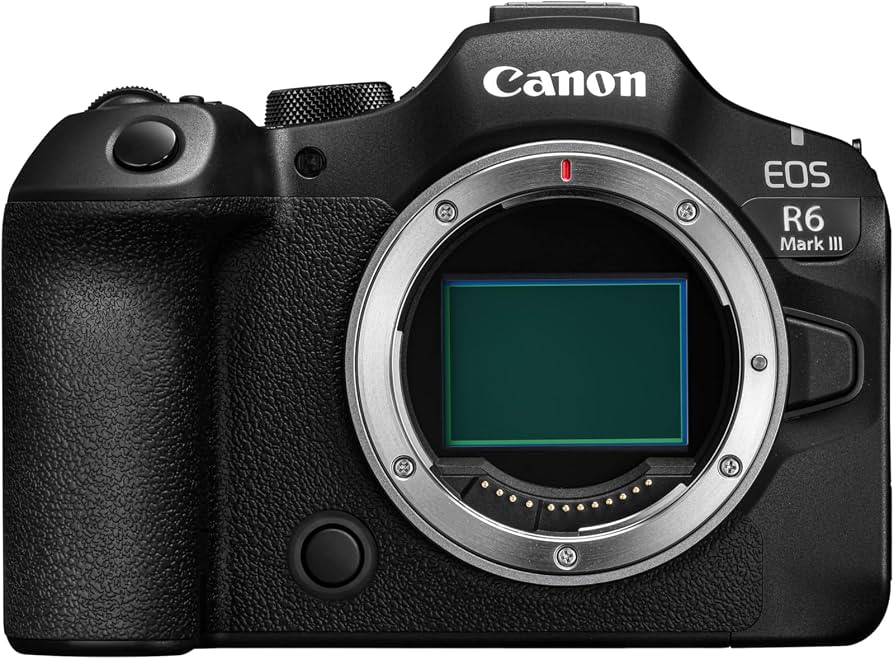
Canon R6 III wins on speed & video: 40fps burst, 8.5-stop IBIS, uncropped 4K 120p, lighter body (609g), and lower price.
Only $100 apart. Pick Sony for landscapes, portraits, and studio work. Pick Canon for sports, wildlife, and video.
Side-by-Side Spec Comparison
| Feature | Sony A7V | Canon R6 III |
|---|---|---|
| Sensor | 33.0MP partially-stacked Exmor RS | 32.5MP full-frame CMOS |
| Dynamic Range | Up to ~16 stops | Up to ~15 stops |
| Max Burst | 30fps | 40fps |
| Pre-capture | Up to 1 sec | 20 frames (~0.5 sec) |
| Stabilization | 7.5 stops | 8.5 stops |
| 4K 120p | Super35 crop | Full-frame |
| Battery (CIPA) | ~750 shots | ~620 shots |
| Weight | ~723g | 609g |
| Price (USA) | $2,899 | $2,799 |
Both the Sony A7V and Canon EOS R6 Mark III target the same buyer: photographers and hybrid shooters who want flagship-adjacent performance without a flagship price tag. Both cameras made major leaps over their predecessors, but they took different paths to get there.
Sony spent the last several years proving that sensor technology and dynamic range are the foundation everything else builds on. Canon, meanwhile, looked at what working photographers and video shooters actually do in the field — chase fast action, shoot handheld, need every frame to count — and built a camera that removes as many technical barriers as possible. Neither approach is objectively “better.” They’re optimized for different jobs, and understanding which job is yours is the real question this comparison answers.
We pulled the official specs from Sony and Canon’s own pages, cross-checked real-world reports from early reviewers, and broke down where each camera pulls ahead — and where it falls behind.
Sony A7V: Where It Wins
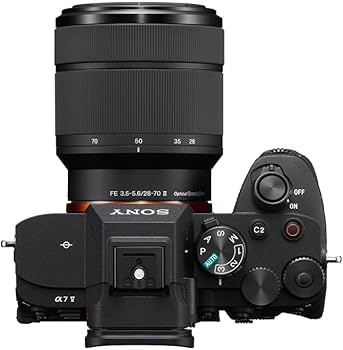
The A7V’s 33.0MP partially-stacked Exmor RS sensor delivers up to 16 stops of dynamic range. That’s a full stop more than the Canon in challenging light, and it shows in the shadows. Its pre-capture records up to 1 second before you press the shutter, and Sony’s E-mount lens ecosystem remains the deepest on the market.
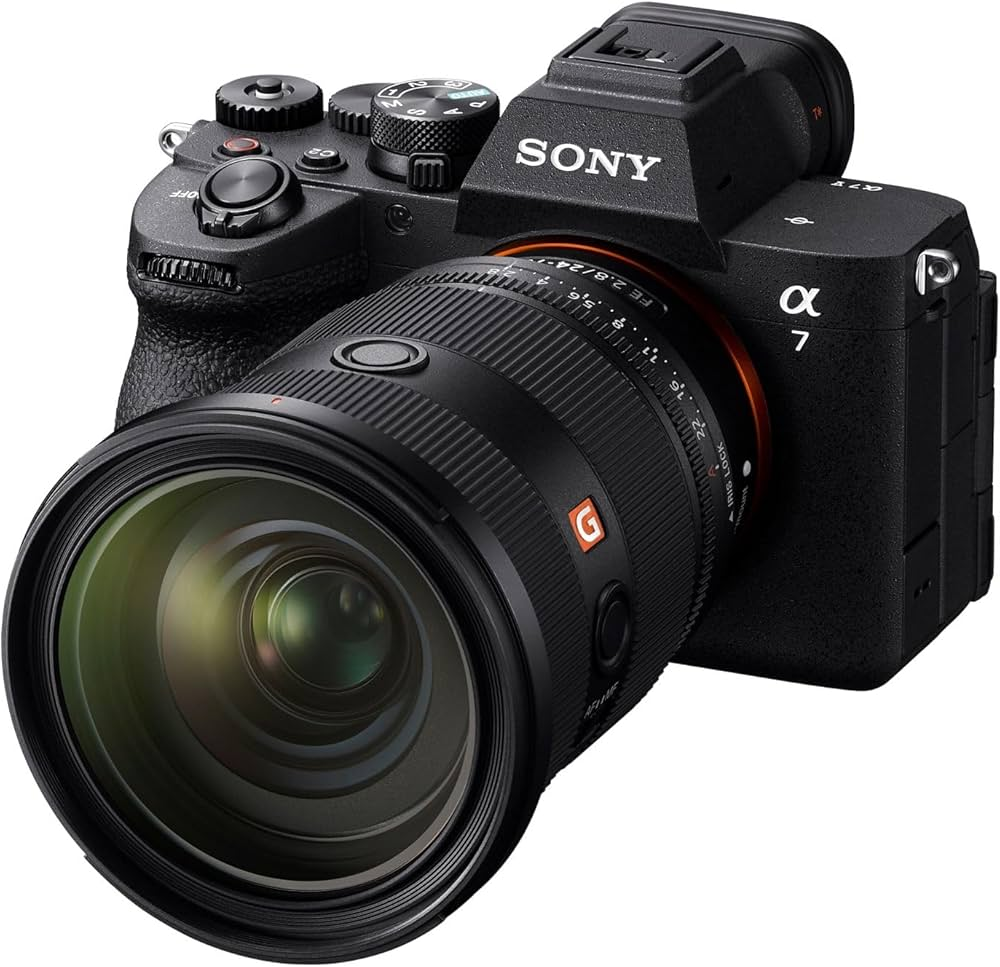
The A7V also introduces dual base ISO, giving cleaner files at both ISO 100 and ISO 640. For landscape shooters who bracket exposures or portrait photographers who push shadows, this is a meaningful advantage. Battery life is rated at ~750 shots per charge — over 100 more than the Canon.
That extra headroom in dynamic range translates directly into post-production flexibility. Wedding photographers shooting into windows, landscape photographers chasing golden hour, and anyone who shoots RAW and edits hard will feel the difference before they even open a spec sheet — it shows up as detail that simply isn’t there to recover on a camera with a stop less latitude. Combined with the dual base ISO architecture, the A7V is quietly one of the best stills cameras Sony has ever built for anyone who treats the RAW file as a starting point rather than a finished product.
Where the A7V stumbles is speed. Thirty frames per second is fast, but the Canon’s 40fps is noticeably quicker for action. And while 7.5 stops of stabilization is excellent, Canon’s 8.5 stops is class-leading. The extra ~114 grams of body weight is also noticeable across a full day of shooting with a longer telephoto attached, though it’s still well within the range most photographers find comfortable for handheld work.
Pros
- Best-in-class dynamic range (~16 stops)
- Longer pre-capture buffer (1 sec)
- Deeper lens ecosystem
- Longer battery life (~750 shots)
- Dual base ISO
Cons
- Slower burst (30fps vs 40fps)
- Weaker stabilization (7.5 vs 8.5 stops)
- 4K 120p is Super35 crop
- Heavier (~723g vs 609g)
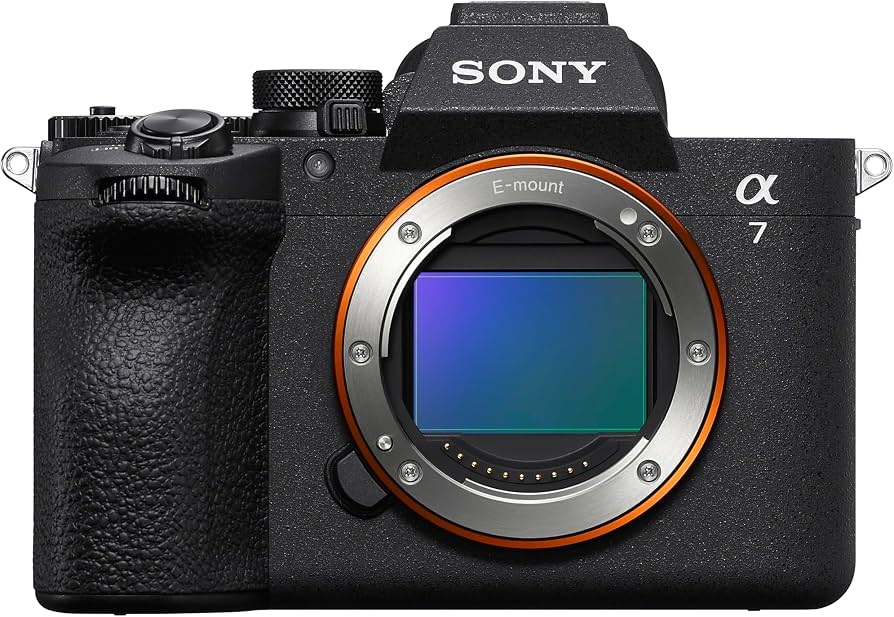
Canon EOS R6 Mark III: Where It Wins
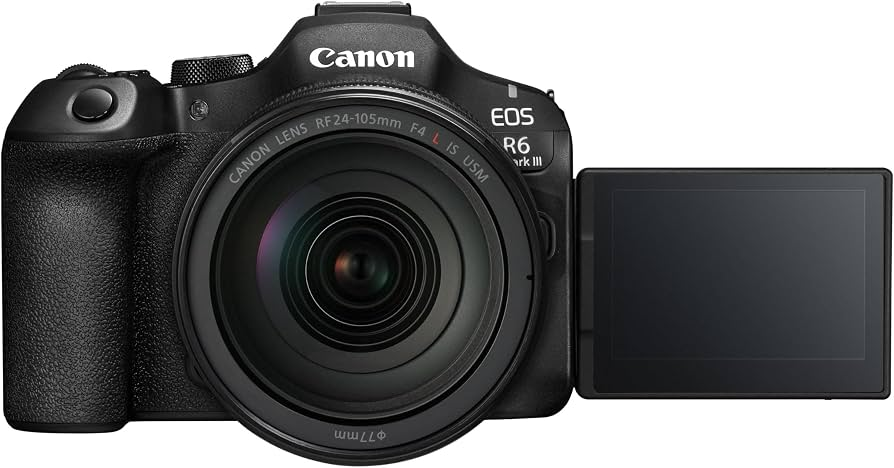
The R6 III counters with a blistering 40fps electronic burst — 10 frames per second faster than the Sony. For sports and wildlife, those extra frames matter. Best-in-class 8.5-stop stabilization lets you hand-hold slow shutter speeds that would blur on any other body.
The standout video feature is true full-frame 4K 120p — no crop, no compromise. Sony’s 4K 120p drops to Super35, which changes your field of view and depth of field. At $2,799 and 609g, the Canon is both cheaper and lighter.
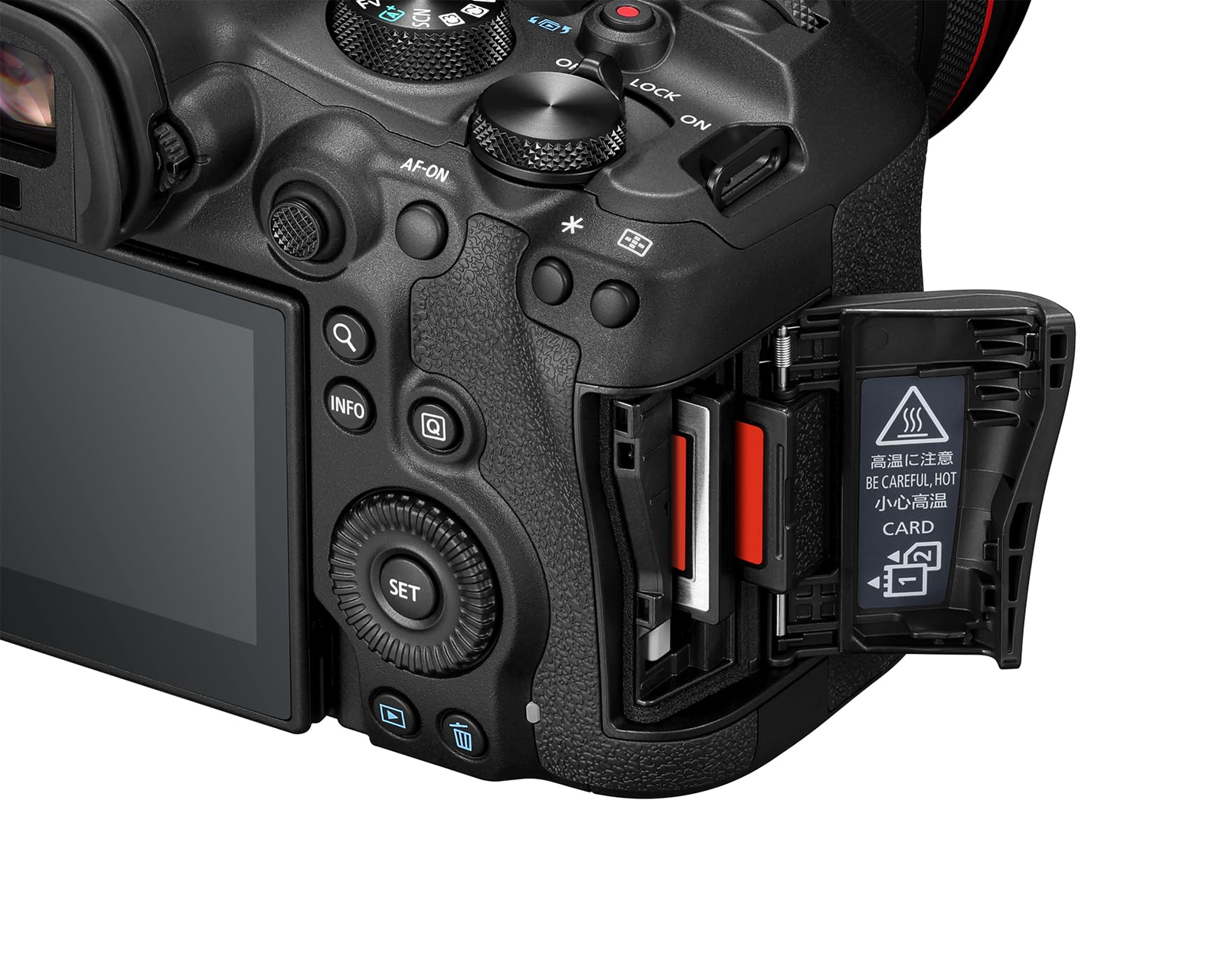
That weight and price gap compounds over a full kit. A photographer carrying two bodies and several RF lenses will feel the roughly quarter-kilo difference per camera by the end of a wedding or a full day on the sideline, and the $100 savings on the body itself is easy to reinvest into a card, a battery, or a second lens. The dual card slots — one CFexpress Type B, one UHS-II SD — also give working professionals a flexible way to mix high-speed buffer clearing with affordable backup storage, something event and sports shooters lean on heavily.
Register People Priority is another small but meaningful edge: photographing and tagging a specific subject in-camera means the AF system keeps returning to that person even in a crowd, which matters more than it sounds like for wedding and event work where the couple needs to stay in focus regardless of who walks through frame.
Pros
- Faster burst (40fps)
- Best stabilization (8.5 stops)
- 4K 120p full-frame, no crop
- Lighter (609g)
- Cheaper ($2,799)
Cons
- Lower dynamic range (~15 stops)
- Shorter battery life (~620 shots)
- RF lens ecosystem still growing
Build Quality & Ergonomics
Neither camera feels like a compromise in the hand, but they solve the same problem differently. Sony’s body keeps the compact, rangefinder-inspired shape the A7 series has used for a decade, with a grip that’s been subtly reshaped for a more secure hold with longer lenses. The 4-axis multi-angle screen is a genuine upgrade over the previous generation’s simple flip screen — it tilts for waist-level photography and folds fully forward for vlogging, something the old hinge couldn’t do.
Canon leans into its DSLR heritage. The R6 III’s deeper, more sculpted grip feels planted even with a 100-500mm lens mounted, and the control layout — dedicated AF joystick, top mode dial, rear scroll wheel — will feel instantly familiar to anyone coming from an EOS DSLR. The vari-angle touchscreen is bright and responsive in direct sunlight, and the dual card slots (CFexpress Type B plus UHS-II SD) give event shooters a safety net that Sony’s dual-slot setup, while capable, doesn’t quite match in raw write speed.
Weather sealing is comparable on both bodies, rated for professional outdoor use in light rain and dust. The real differentiator is weight distribution: the Canon’s extra grip depth makes it feel more front-heavy with big glass, which some shooters prefer for stability and others find fatiguing over a full day.
Autofocus in the Field
Both cameras use AI-driven subject detection, and both are genuinely excellent — this isn’t a case of one system being obviously worse. Sony’s Real-Time Recognition AF is remarkably good at finding human eyes even through sunglasses or partial obstruction, and its animal-eye detection tracks birds in flight with real consistency, helped further by the pre-capture buffer working in tandem with the AF system.
Canon’s Dual Pixel CMOS AF II counters with deep-learning subject detection across people, animals, and vehicles, plus Register People Priority for crowded scenes. Where Canon edges ahead is continuous AF lock during high-speed bursts: at 40fps, the R6 III holds focus with a consistency that Sony’s 30fps system can’t quite match on erratically moving subjects, and low-light AF sensitivity down to EV -6.5 keeps it hunting less in dim venues.
Video: The Hybrid Divide
For video-first creators, the differences become more concrete. Canon’s full-frame 4K 120p is the standout feature here — uncropped, oversampled, and ready for slow-motion work without any change in field of view or focal length. Paired with the 8.5-stop stabilization, handheld footage looks remarkably close to gimbal work straight out of camera.
The Sony A7V isn’t outclassed, though. It records 4K 60p in full-frame with 7K oversampling for exceptional detail, and its 10-bit 4:2:2 internal recording with S-Cinetone color science gives filmmakers a strong starting point for grading. The catch is that pushing to 4K 120p forces a Super35 crop, which tightens your field of view and can complicate matching shots across frame rates on a documentary or run-and-gun shoot. Both cameras manage heat well for typical session lengths, though the Canon’s larger chassis gives it a slight edge for extended 4K 120p recording in warm environments.
Who Should Buy What
Buy the Sony A7V if you…
Shoot landscapes, portraits, or studio work where every stop of dynamic range shows up in the final edit
Rely on a deep lens ecosystem with mature third-party and used options from Sigma, Tamron, and others
Value the 1-second pre-capture buffer for unpredictable moments — street, wildlife, family candids
Need the cleanest possible low-light stills thanks to the dual base ISO
Want longer battery life for full-day shoots without swapping packs
Prefer a slightly smaller, lighter-feeling body for everyday carry and travel
Buy the Canon R6 Mark III if you…
Shoot action, sports, or wildlife where every extra frame per second matters
Need uncropped 4K 120p for professional slow-motion video work
Value ergonomics and grip security with large telephoto lenses
Want the lightest body and lowest price without sacrificing flagship-adjacent performance
Shoot events or weddings where Register People Priority keeps your subject locked in
Already own EF glass and want a smooth adapter path into mirrorless
Bottom Line
Sony A7V — if dynamic range, resolution, lens selection, and battery life matter most. The 1-second pre-capture and dual base ISO are unique advantages.
Canon EOS R6 Mark III — if you shoot fast action or want uncropped 4K 120p with the strongest stabilization. At $2,799 and 609g, it’s the better value.
At only $100 apart, price alone shouldn’t decide this for you. Both are among the best full-frame hybrids available right now — the right choice comes down to whether your work leans toward maximum image quality and flexibility (Sony) or maximum speed and video reach (Canon).
FAQ
CameraCompared is a participant in the Amazon Services LLC Associates Program. Prices subject to change. Specs verified against Sony.com and Canon USA.